
The Demolition Squad
Rangers forged in the ashes of a broken world, the only ones who remember what was.

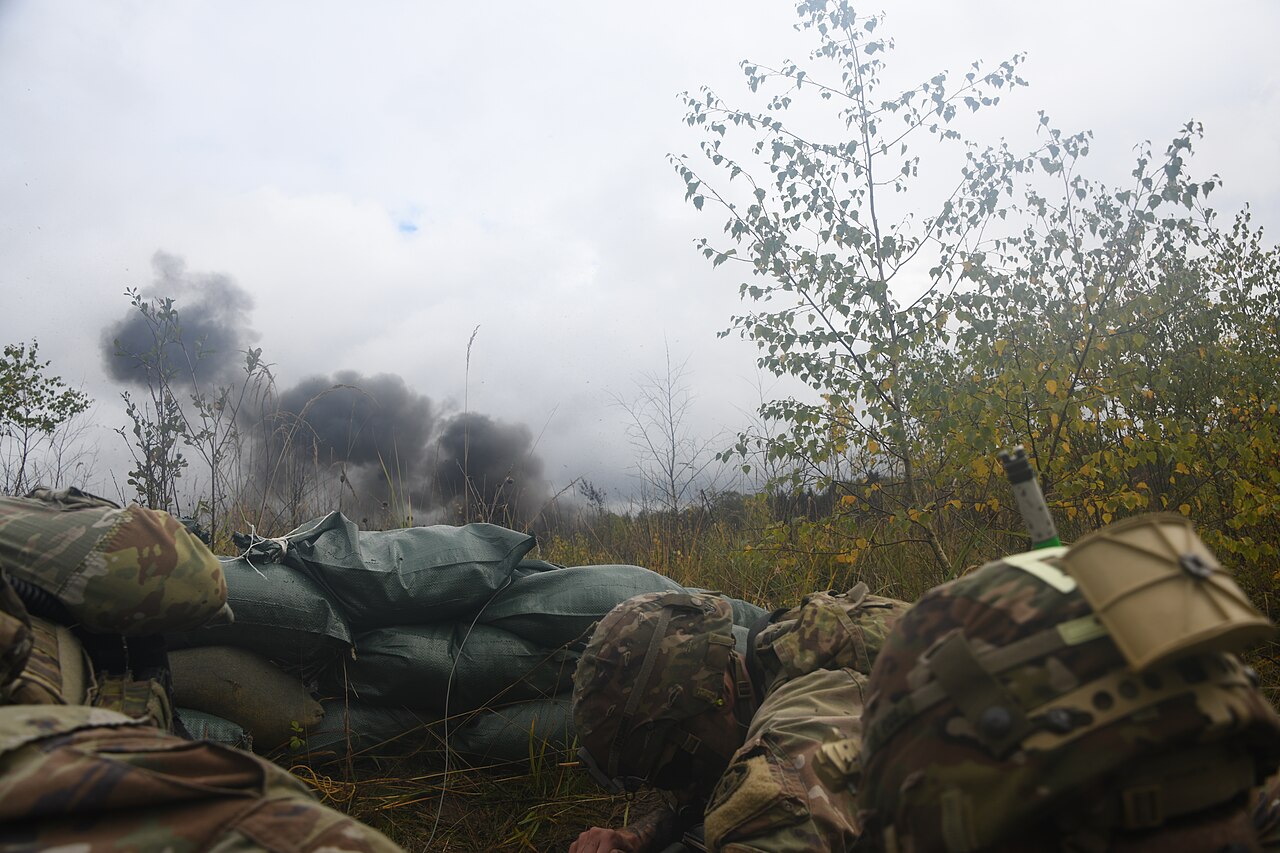
U.S. Army photo by Sgt. Randis Monroe · Public domain
The Demolition Squad is the player's unit in the original Wasteland (1988), a post-apocalyptic role-playing game set in a nuclear-war ravaged America. Comprised of Desert Rangers, the squad was formed after the war as a law-enforcement and survival force in the southwestern U.S., not a pre-war military unit. The Demolition Squad concept carries forward thematically through the franchise. In Wasteland 2 (2014), the player is a new recruit to the Desert Rangers, and in Wasteland 3 (2020), the player leads a squad of Rangers from Arizona, carrying on the legacy of the original Rangers through similarly desperate, choice-driven narratives across the American wasteland.
- Affiliation
- Desert Rangers (original); Desert Rangers (sequels)
- Role
- Player squad / protagonists
- First appears
- Wasteland (1988)
- Setting
- Post-nuclear-war United States
- Developers (modern entries)
- inXile Entertainment
- Original publisher
- Interplay
Verified Timeline
Lore & Background
After the bombs fell, the Desert Rangers emerged as a post-war organization dedicated to maintaining order and protecting survivors in the southwestern U.S. The Demolition Squad, a unit within the Rangers, was formed from those who had the skills to handle explosives and dangerous missions. They were not a pre-war military unit; they were wastelanders who banded together when civilization collapsed. In the years that followed, the squad became something between outlaws and reluctant saviors. They bartered with warlords, negotiated with desperate settlements, and made choices that no military briefing had prepared them for—whether to spare a village, to hand over a weapon, to let a child go or keep them. The Wasteland did not care about their medals. It only cared whether they could still walk, still shoot, and still decide. The legacy of the Demolition Squad echoes through the franchise. In Wasteland 2, a new recruit is sent into the American West to find and neutralize a nuclear threat, carrying the weight of what the original squad left unfinished. In Wasteland 3, a squad of Rangers from Arizona is assembled for a mission into Colorado Springs, Colorado, where a nuclear device looms over a city that has already lost everything else. The thread is the same: small groups of people trying to keep the world from ending a second time, armed with little more than their skills and their conscience.
In Their Own Story
The dust had a taste. Copper and ash, coating the back of the throat no matter how often you rinsed. The Captain crouched behind the rusted hull of a delivery truck, watching the settlement's gate through cracked binoculars. Three guards. Two of them drinking. The third scanning the road with a rifle that probably had one working bolt. "We go in quiet or we don't go in," she said, not turning around. Behind her, the squad shifted—boots on gravel, the soft creak of a shotgun being cycled. No one argued. They never did. Not anymore. Not since the base, not since the sky turned the color of a bruise and the radio went silent forever. They were demolition specialists. They knew how to make things stop existing. What they had learned, the hard way, was that sometimes the harder job was deciding what was worth saving. The gate guard raised his rifle. The Captain lowered her binoculars. "Alright," she said. "Loud."
Reader's Guide
The Demolition Squad is the player's unit in Wasteland (1988). You play as the squad leader, a former US Army demolition expert, guiding your companions through a shattered Los Angeles and beyond. Your role is to complete the mission to destroy the nuclear depot while navigating a world where every faction—warlords, scavengers, surviving military outposts—has its own agenda. Squad members each bring distinct combat and skill profiles; you allocate experience and equipment, and your choices in dialogue and morality shape which settlements trust you and which turn hostile. In Wasteland 2, the Demolition Squad is referenced as the original generation. You play as a Wastelander, a survivor from that era, sent into the American West. Your squad is new, but the lore carries the weight of what the first squad endured. Combat is turn-based, and your companion roster and dialogue choices drive branching outcomes across multiple factions. In Wasteland 3, you lead a fresh squad into Denver, Colorado. The Demolition Squad is now history—legend, really—but the game's structure is the same: a small group, a nuclear threat, and a web of choices where no two playthroughs resolve identically. Companion relationships, faction alignment, and skill builds all gate different endings and side-mission outcomes. Across all three entries, the core loop is: explore a hostile settlement, talk your way in or fight your way through, make a moral call, and live with the consequences in the next act.
Did You Know?
- The original Wasteland (1988) was one of the earliest post-apocalyptic RPGs, predating the Fallout series, which was later developed by a team with ties to the same studio lineage.
- There was a gap of roughly 26 years between Wasteland (1988) and Wasteland 2 (2014), making it one of the longest-running dormant franchises in gaming before its revival.
- inXile Entertainment, the developer of Wasteland 2 and 3, was founded by Brian Fargo, who was also a key creative force behind the original 1988 game.
- The games use a turn-based combat system, a deliberate contrast to the real-time action that became common in RPGs during the same era.
Gallery
Frequently Asked Questions
Who is The Demolition Squad?
The Demolition Squad is the player-controlled group in the 1988 original Wasteland, a unit of former US Army demolition specialists. They were originally dispatched to Los Angeles to destroy a nuclear weapons depot, but the apocalypse caught them in the field and left them stranded in a ruined, irradiated landscape.
What is The Demolition Squad's role in Wasteland?
They serve as the protagonists and the player's avatar, tasked with scavenging, fighting hostile factions, and making morally fraught survival decisions across a broken city. Their military training as demolition experts defines their skill set, and they carry the unique burden of being the last people who remember what the pre-war world was like.
How does The Demolition Squad's story end?
The original game offers no single fixed conclusion; the squad's fate shifts based on the player's choices as they navigate a shattered Los Angeles. Their narrative arc is fundamentally about survival and the weight of being the only ones left who remember what civilization looked like before the bombs fell.
Why is The Demolition Squad important to the Wasteland franchise?
They established the franchise's core identity: soldiers abandoned when the world ended, now the sole keepers of memory from the old world. Every subsequent entry, including Wasteland 2 (2014) developed by inXile Entertainment, carries forward their thematic legacy through the broader 'Wastelanders' concept.
What's the difference between the Demolition Squad and the Wastelanders in later games?
The Demolition Squad specifically refers to the original 1988 unit of US Army demolition specialists, while 'Wastelanders' is the broader umbrella term for the player's group in the modern sequels. The concept evolved thematically across the franchise, but the original squad remains the foundational group that defined the series.
More in Characters & Factions
Related in Wasteland
Links follow this subject's own source article.
Elsewhere in the Wasteland universe
Spotted an error? Know more?
This is a living reference — every entry is fact-audited, and reader corrections feed straight into our audit queue. Suggest an edit · See this site's audit record